Nile Hippopotamus Animal Kingdom
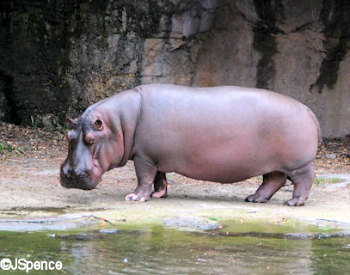
The Nile Hippopotamus can be seen on both the Kilimanjaro Safaris as well at the Pangani Exploration Trail.
The following information is quoted from: http://nationalzoo.si.edu/Animals/AfricanSavanna/fact-hippo.cfm.
All photos were taken at Animal Kingdom.
**********
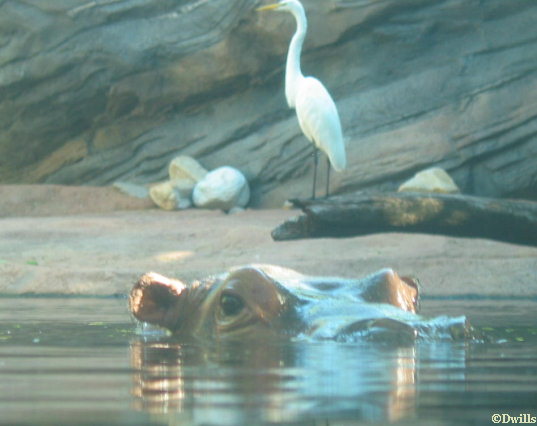
A land animal adapted for an amphibious life, this bulky animal wallows by day and grazes on land by night.
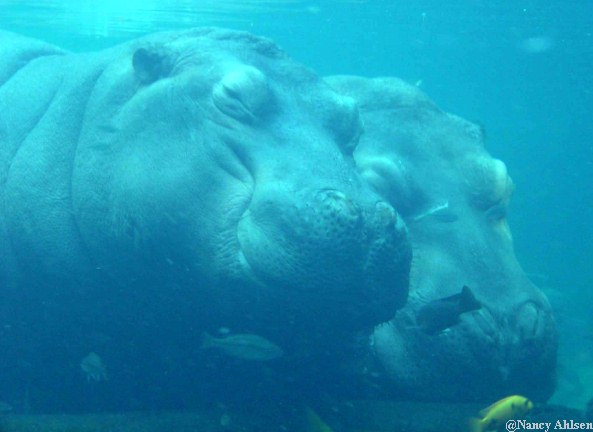
Bulky and barrel-shaped, Nile hippos may look clumsy, but they are supremely adapted to their mixed terrestrial/aquatic lifestyle. Their eyes, ears, and nostrils (which close when the animals submerge) sit atop their heads.
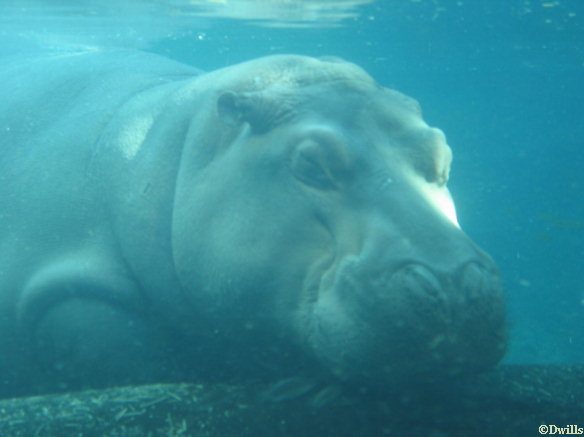 Nile hippopotamuses grow up to 15 feet long. Males are heavier than females, weighing up to 8,000 pounds. Nile hippos stand from four and a half to five and a half feet tall.
Several species of grass provide Nile hippopotamuses with virtually all of their food. While they consume up to 88 pounds of grass per night, this amount (about one to one and a half percent of their body weight) is about half that required by other hoofed mammals. Hippos' habit of resting in water during the day reduces energy and food demands.
Nile hippos live only in sub-Saharan Africa. They inhabit rivers, lakes, and wetlands from western African countries like Guinea east to Ethiopia and south to northeastern South Africa.
Nile hippopotamuses live up to 45 years in the wild, and often a few years longer in zoos.
 Adult hippos can stay underwater for up to five minutes. Sleeping hippopotamuses can rise to the water's surface to breathe.